
Cabinet and Wardrobe Hinges: From Selection to Adjustment
The hinge decides how a door opens, where it stops and how precisely it closes. A few simple concepts turn hinge selection from guesswork into an engineering decision.
01What is a concealed hinge?
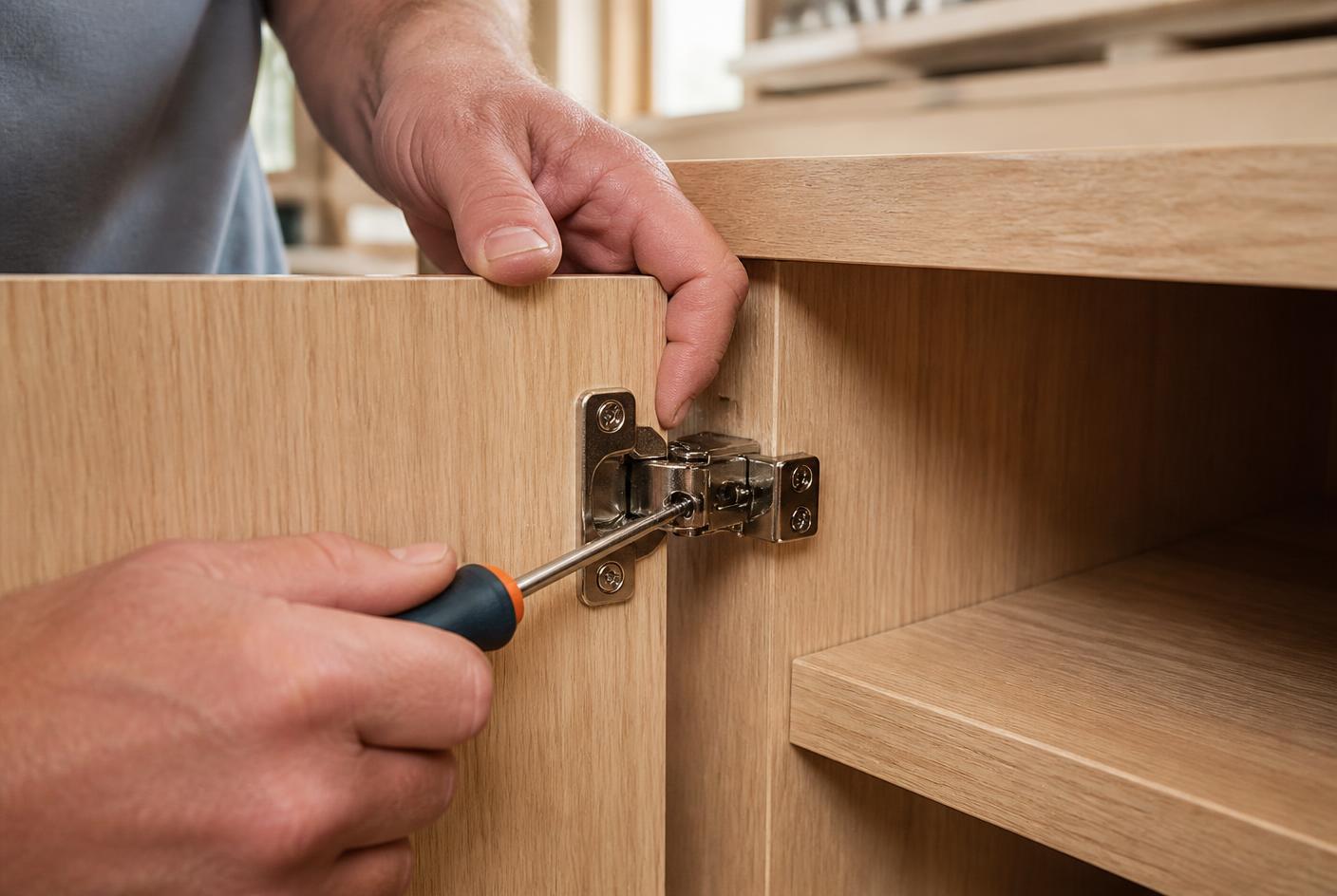
In modern cabinets and wardrobes, the most common hinge is the concealed (cup) hinge. Its cup sits in a 35 mm bore at the back of the door and its arm attaches to the carcass. The result is a door with no visible hinge from the outside, easily adjusted in three directions.
02Full overlay, half overlay or inset?
| Type | Door position | Use |
|---|---|---|
| Full overlay | Door covers the whole side panel | Single cabinets and end units |
| Half overlay | Two doors share one side panel | Between two adjacent cabinets |
| Inset | Door sits inside the frame, flush | Classic and framed designs |
03Opening angle
- 95–110°: standard for most cabinets and wardrobes
- 155–170°: when the door must swing fully clear, e.g. for internal drawers or full access
- Pivot and rotating hinges up to 270°: for tall or heavy doors, or doors that fold back behind the carcass
04How many hinges per door?
The number depends on door height and weight. This table is a general guide for ordinary timber doors; heavy, glass or mirrored doors need more:
| Door height | Hinges |
|---|---|
| Up to 90 cm | 2 |
| 90–160 cm | 3 |
| 160–200 cm | 4 |
| 200–240 cm | 5 |
053D adjustment
- 1Side adjustment: equalises the gap to the neighbouring door.
- 2Depth adjustment: sets the distance from the carcass so the door sits fully closed.
- 3Height adjustment: aligns the top and bottom edges of doors in a row.
06Integrated or add-on soft-close?
Hinges with integrated soft-close hide the damper inside the hinge and are the cleanest choice. Add-on dampers can be fitted to standard hinges — a good way to upgrade existing cabinets.
07Special cases
- Glass doors: dedicated clamp or bonded hinges, no drilling of the glass
- Thick or aluminium-frame doors: hinges with cups and arms made for that thickness
- Corner cabinets: angled hinges or bi-fold door hinges
- Very tall doors: pivot hinges or systems that rotate the door around one axis
Nobody notices a good hinge — they only feel that the door closes right.
Need advice on hardware and mechanisms for your project?
Request a consultation.jpg)
.jpg)