
Sliding and Pocket Door Systems: Free Up the Space
A sliding door needs no swing space, and a pocket door disappears entirely. In today’s homes, where every centimetre counts, these systems have become a core design tool.
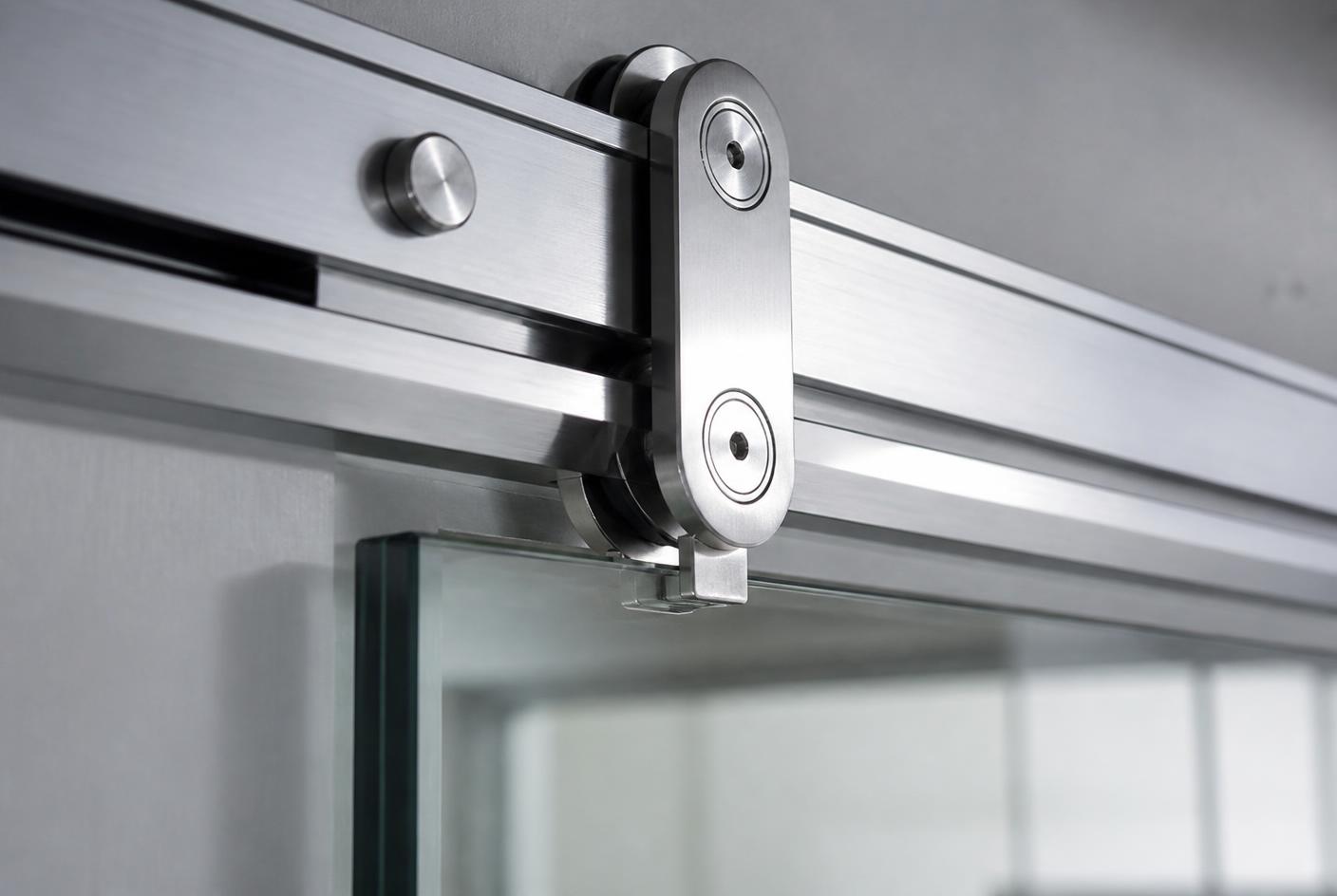
01Top-hung or bottom-rolling?
| System | Advantage | Note |
|---|---|---|
| Top-hung | Clean floor, no bottom track; smooth movement | Ceiling or header must carry the door weight |
| Bottom-rolling | Suits heavy doors | Floor track needs regular cleaning |
02Layouts
- Surface-mounted: the door slides in front of the wall — the simplest installation.
- Pocket: the door disappears into the wall — requires a dedicated in-wall frame.
- Telescopic (synchronised): several leaves move together to open a wider span.
- Wardrobe sliding doors: two or three leaves on parallel tracks, or flush systems that form one continuous surface when closed.
03Dimensions and space
- For surface-mounted doors, the track is usually about twice the door width.
- For pocket doors, the wall beside the opening needs clear space at least as wide as the door.
- Wall thickness for a pocket frame depends on door thickness and system, and must be fixed before the wall is built.
04Door weight and material
Each system is rated for a weight range. Glass doors need dedicated clamps and fittings, and large timber doors may require a heavier system. Calculate the real door weight including hardware and handles.
05Soft-close and details
- Double soft-close: the door slows gently at both ends of travel.
- Floor guide: stops the bottom of the door from swinging and is almost invisible.
- Flush pull: essential for pocket doors so the door can slide fully into the wall.
06Care
Keep tracks free of dust and check screws and height adjustment every few months. Most quality systems need no oil — oil attracts dust.
Need advice on hardware and mechanisms for your project?
Request a consultation.jpg)
.jpg)
.jpg)